

Whether a damaged pipe should be patched, relined or replaced depends on the type of pipe, the extent of the damage and the condition of the surrounding section. An isolated leak may only need a local repair, while certain damaged waste or drain pipes may be suitable for internal relining. A collapsed, badly corroded or incorrectly graded pipe may require replacement.
The repair method should be selected after the cause and extent of the problem have been identified. Relining is not suitable for every plumbing fault, while replacement may be necessary only where damage is extensive, or the pipe layout needs correction. The right option depends on the condition of the individual pipe.
Pipe Repair Options At A Glance
The right repair depends on what has gone wrong, how much of the pipe is affected and the condition of the surrounding pipework. A small, isolated problem may only need a local repair, while more extensive damage may require relining or replacement.
The table below gives a quick guide to which options may be suitable for your home:
| Problem | Repair that may be suitable |
| Isolated leak | Local repair |
| Failed fitting or joint | Local repair or fitting replacement |
| Short damaged section | Section replacement |
| Cracked pipe | Local repair or relining |
| Root intrusion | Pipe relining |
| Leaking drain joints | Pipe relining |
| Widespread internal damage | Pipe relining or replacement |
| Collapsed pipe | Replacement |
| Badly deformed pipe | Replacement |
| Incorrect pipe gradient | Replacement |
| Repeated failures along the same pipe | Longer section or full replacement |
Please note: This is a general guide. The right repair still depends on the pipe type, location and extent of the damage, so an inspection may be needed before the best option can be confirmed.
What Determines How a Damaged Pipe Can Be Repaired?
The repair method depends on more than where the visible damage is. The condition of the surrounding pipe, the type and extent of the damage, the pipe material, its location and how easily it can be accessed all affect which options are suitable.

An isolated problem in an otherwise sound pipe may only need a local repair. More extensive damage may be suitable for relining, while severe collapse, deformation or an incorrect gradient may mean part or all of the pipe needs to be replaced.
How Do You Know Whether a Pipe Can Be Patched?
A broken pipe repair is usually most appropriate when the damage is limited to one identifiable area and the surrounding pipe remains in good condition.
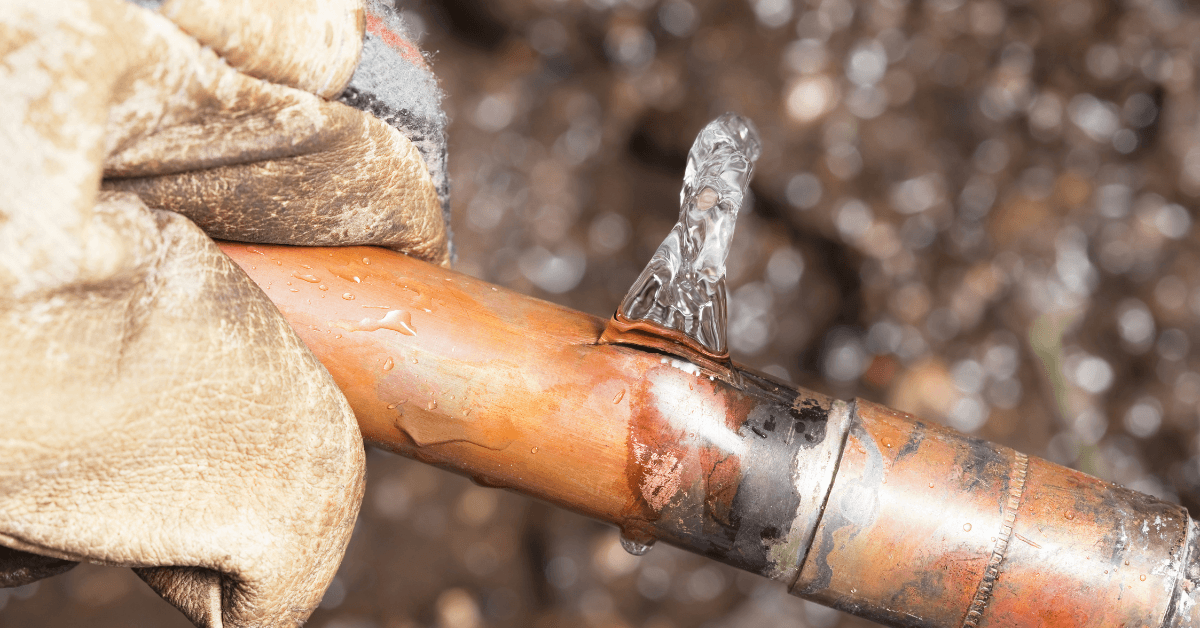
The word “patch” can refer to different repair methods depending on the plumbing system. The exact method depends on whether the damaged pipe carries clean water, wastewater or runs underground. A fitting may be replaced, a short damaged section may be cut out, or an appropriate local repair may be made to a suitable section of pipe.
When A Local Repair May Be Enough
A local repair may be suitable when:
- One joint or fitting is leaking
- A short accessible section is cracked
- The pipe was damaged during drilling or building work
- One connector or valve has failed
- The surrounding material is not corroded or brittle
- The fault has not occurred repeatedly in nearby sections
- The pipe remains correctly supported and aligned
- The damaged section can be removed or repaired without compromising the rest of the system
A cracked pipe repair can be a lasting solution when the damage is genuinely isolated, and the surrounding pipe remains sound.
For example, replacing one leaking fitting may solve the problem when the fitting itself has failed. There is little reason to replace an otherwise sound pipe simply because one connection has deteriorated.
When A Patch May Only Delay A Larger Repair
Repairing only the visible defect may not make sense when the surrounding pipe is already showing signs of failure.
Warning signs include:
- Several leaks along the same pipe
- Corrosion extending beyond the visible defect
- Brittle pipe material
- Movement caused by poor support
- Cracks or deformation around the damaged section
- A previous repair that has failed
- Incorrect sizing or installation
- An underlying cause that has not been corrected
Replacing one leaking fitting may solve the problem where the fitting itself has failed. It may not provide a lasting solution where the nearby pipe is already corroded and likely to develop another leak.
This is why you shouldn’t always treat the visible leak as the entire problem.
Why External Repair Products Are Not Always A Permanent Fix
Tape, putty, clamps and sealants may sometimes help control a leak temporarily, but they do not automatically restore the full integrity of a damaged pipe.
They may be unsuitable where:
- The pipe carries water under pressure
- The surface is heavily corroded or uneven
- The pipe is cracked rather than punctured
- Wastewater is escaping from a failed joint
- The pipe moves or flexes
- The damage is concealed inside a wall, floor or underground
An emergency measure can help reduce water loss while you wait for professional assistance, but it should not be confused with a properly assessed and completed repair.
When Is Pipe Relining The Right Repair?
Pipe relining may be suitable for certain damaged water, waste and drainage pipes where the existing pipe can be accessed, cleaned and prepared for the chosen lining system.
Instead of removing the entire existing pipe, a new lining is installed inside it. This can restore suitable damaged pipes while reducing the amount of excavation and reinstatement required.

The important word is “suitable”. Internal lining is not a universal answer to every plumbing fault. The pipe needs to be sufficiently accessible and open for inspection, preparation and installation, and the damage and pipe layout must be suitable for the particular relining method being used.
Problems That May Be Suitable For Relining
Depending on the pipe and extent of the damage, internal lining may be considered for cracks and fractures, leaking joints, root entry points, pipes beneath floors, paving or landscaped areas where excavation would be disruptive, corroded internal surfaces, small gaps between connected sections, localised damage, or longer sections with repeated internal defects.
The existing line generally needs to remain sufficiently open to be cleaned, inspected, and prepared. The damaged section also needs to be reachable from a suitable access point.
Why The Pipe Must Be Inspected First
A CCTV drain inspection may be required to establish:
- Where the damage is located
- How much of the pipe is affected
- Whether the line is open or collapsed
- Whether roots, grease or debris must first be removed
- Whether there is severe displacement or deformation
- Whether bends and junctions affect access
- Whether the damaged section can be cleaned and prepared
- Whether the lining would reduce the internal diameter unacceptably
The footage should be considered alongside the pipe material, layout and drainage behaviour. One visible crack does not necessarily show the condition of the entire line.
When Relining Is Unlikely To Work
Internal lining may not be appropriate when:
- The pipe has completely collapsed
- Sections are severely displaced
- The pipe has flattened or become badly deformed
- The gradient is incorrect
- A large section is missing
- The pipe cannot be accessed or cleaned
- The internal diameter is already too restricted
- The pipe layout needs to be altered
- The surrounding structure also needs repair
A lining follows the existing route of the pipe, so it cannot correct every structural, alignment or gradient problem.
The Main Benefit Of Relining
The main benefit is that suitable pipes can be repaired internally, often reducing excavation and the reinstatement required afterwards. However, this does not mean every project will be excavation-free or that internal lining will always be the cheaper option.
The right choice depends on the condition, accessibility and layout of the individual pipe.
When Does The Pipe Need To Be Replaced?
Replacement is usually necessary where the pipe has lost its structural integrity, deterioration is widespread, or the pipe’s position and layout need to be corrected.

That does not automatically mean replacing the entire line. Sometimes replacing a short section is the most sensible solution, particularly when the surrounding pipe remains in good condition.
Section Replacement
A short section may be replaced when the damage is localised, the pipe is accessible, the surrounding pipe is in good condition, internal lining is unsuitable or unnecessary, one section has collapsed or been crushed, a connection needs to be rebuilt, the damaged pipe needs to be repositioned, or a local gradient problem needs to be corrected.
Section replacement is still a targeted repair. It does not automatically mean replacing the complete plumbing system. The key question is whether the remaining pipe can reasonably be expected to continue performing properly once the damaged section has been removed.
Longer Pipe Replacement Or Repiping
A broader replacement may be justified when:
- Corrosion or deterioration affects multiple areas
- Leaks continue appearing along the same pipe run
- The material has become brittle, obsolete or incompatible with the rest of the system
- The pipe is undersized
- The layout causes repeated pressure or drainage problems
- The system has undergone numerous previous repairs
- Several sections are cracked, displaced or deformed
- Accessing and repairing each individual fault would be less practical than replacing the run
- The pipe needs to be rerouted
Replacement should be based on the overall condition of the line, not simply its age. A pipe’s condition, history and performance provide a better indication of whether broader replacement is justified.
Structural Drain Problems That Normally Require Replacement
Some problems cannot be solved simply by restoring the inside surface of a pipe.
Replacement may be necessary where:
- The drain has completely collapsed
- The pipe has severe movement or separation
- The gradient is incorrect
- A sagging section continually retains waste
- The pipe has been crushed by ground movement or building work
- The route must be altered
- The pipe is too badly deformed for an internal lining
- The surrounding ground or support has failed
An internal lining follows the pipe’s existing route. It cannot correct every alignment, support or gradient problem, so replacement may be necessary where the underlying structure or layout also needs to be corrected.
Why Replacement Is Sometimes The More Cost-Effective Choice
The cheapest immediate repair is not necessarily the least expensive solution over time.
If a pipe has already required several repairs and continues developing new faults, repeatedly addressing individual leaks may simply move the problem further along the line. A larger replacement could make more sense when the remaining pipe is in poor condition and further failures are reasonably likely.
The recommendation should be proportionate to the extent of the damage, the pipe’s remaining condition, the cost and disruption of access, the expected durability of each option and the likelihood of another nearby failure. Complete replacement is not automatically the better choice.
How Does A Plumber Decide Between The Three Options?
A good recommendation should be based on evidence, not on selecting a preferred repair method before the problem has been properly investigated. Depending on the pipe type and suspected fault, the assessment may involve several steps to determine what has failed, how extensive the damage is, and whether the surrounding pipe remains suitable for repair.
Confirming The Source Of The Problem
Visible water or a blockage may not originate from the closest pipe or fitting. The plumber may need to establish where the leak begins, whether it is a pressurised supply leak or a waste-pipe leak, and whether the problem is isolated or linked to another section. They may also need to determine whether water is travelling along the pipe before becoming visible or whether the issue is actually a leak, blockage, condensation or groundwater entry.
This is particularly important with concealed pipework, where the point at which water appears may be some distance from the original defect.
Identifying The Pipe Material And Condition
Repair suitability differs between materials, so the plumber should consider the pipe material, diameter and wall condition, as well as any corrosion, brittleness or previous repairs. Joint type, movement and poor support can also affect which repair method is appropriate.
The condition of the surrounding pipe matters just as much as the visible defect. A local repair may be suitable where the rest of the line is sound, while widespread deterioration may make a larger repair more appropriate. No single plumbing pipe repair method applies to every pipe simply because it has developed a leak.
Testing Or Inspecting The Damaged Area
The type of investigation required depends on the plumbing system and the symptoms. This may include visual inspection, pressure testing, leak detection, moisture assessment, CCTV drain inspection or flow testing. Pipe alignment and support may also need to be checked, while a limited section of a wall, floor or ground may need to be opened where the damaged area cannot otherwise be assessed.
Not every fault requires every test. The investigation should match the type of pipe and the suspected cause of the problem.
Comparing The Likely Durability Of Each Option
Once the pipe’s condition is understood, the plumber can compare the likely suitability and durability of each repair method. They should consider whether a local repair addresses the cause, whether the surrounding pipe is likely to fail soon, whether an internal lining can be installed successfully and whether replacement is needed to correct the pipe route or gradient.
Access and future maintenance also matter. The proposed repair should provide reasonable value for the pipe’s remaining condition rather than simply offering the lowest immediate cost.
The right repair is not simply the cheapest quotation or the method involving the least digging. It is the least extensive solution that can reasonably address the actual problem.
What Should You Ask Before Approving A Pipe Repair?
You do not need to know the technical answer yourself. What matters is whether the recommended work can be clearly connected to what was actually found during the assessment.
Useful questions include:
- What exactly has failed?
- Is the damage isolated or present along a longer section?
- What pipe material is affected?
- Can you show me the leak, footage or test result?
- Why is a patch suitable or unsuitable?
- Is relining technically possible?
- Would relining correct the cause or only cover the damaged surface?
- Why is replacement necessary?
- Does the full pipe need replacement or only one section?
- Is the pipe gradient or alignment part of the problem?
- What preparation or excavation will be required?
- What parts of the pipe could not be inspected?
- What could cause the repair to fail?
- What work will be needed to reinstate walls, floors, paving or landscaping?
- Is any follow-up testing included?
A clear recommendation should establish what was found, why the proposed method fits the damage, what alternatives were considered and what limitations remain. You should also understand what the completed repair is expected to achieve and whether any areas of the pipe could still require attention later.
This gives you a better basis for understanding the proposed work than simply comparing the final prices on two quotations.
Arrange A Pipe Repair Assessment In Cape Town
When a pipe is damaged, the first step is identifying what has failed and how extensive the damage is. Absolute Plumbing can assess leaking, concealed and underground pipework, including damaged water-supply pipes and drainage systems.
The aim is to determine whether the damage is localised or widespread and whether patching, relining or replacement is the most suitable and least disruptive option. This helps avoid repeated repairs that only address the visible fault and provides a clear recommendation based on the pipe’s condition.
Not sure whether your damaged pipe needs a small repair, relining or replacement? Contact Absolute Plumbing Cape Town for an assessment and a clear repair recommendation based on your pipe’s condition.
Frequently Asked Questions About Pipe Repair
Can A Collapsed Pipe Be Relined?
Generally, a completely collapsed pipe cannot be relined because there is no usable passage for the lining system. Significant deformation can create the same problem by restricting access or preventing proper preparation. A partially damaged section may still be assessed on its individual condition, but this depends on the degree of collapse and the pipe layout. Where the line has lost its shape or structural position, replacement may be necessary to restore the drainage route itself.
Is Pipe Relining Better Than Replacement?
Neither method is universally better. Relining may be suitable where the existing line remains structurally appropriate, and excavation would be disruptive. Replacement may be necessary where the pipe has collapsed, is severely displaced, has widespread deterioration or needs its route or gradient corrected. The right choice depends on the pipe’s actual condition. A proper assessment should compare the available options rather than assuming that either relining or replacement is always preferable.
Does Pipe Relining Require Digging?
Not necessarily. Relining is designed to reduce excavation by allowing suitable pipes to be repaired from inside. However, access work or localised excavation may still be necessary depending on the pipe layout, access points and condition of the line. It would therefore be inaccurate to promise that every project will be completely excavation-free. The amount of disruption can only be established after the pipe has been located, inspected and assessed for the proposed repair method.
How Do You Know If The Whole Pipe Needs Replacing?
The whole line may not need replacing simply because one section has failed. Broader replacement becomes more likely when deterioration is widespread, several leaks have occurred, the material is failing, or the pipe layout contributes to recurring problems. Previous repairs are also relevant because repeated failures can indicate that the remaining pipe is no longer in suitable condition. A plumber should assess the wider run before recommending complete replacement, particularly where only one area is visibly damaged.
Can You Replace Only The Damaged Section Of Pipe?
Yes, a damaged section can often be replaced when the fault is localised, and the surrounding pipe remains in suitable condition. The accessibility of the section, pipe material, joint configuration and cause of the damage all affect whether this is practical. Replacing a short section can be a sensible way to resolve a genuine isolated failure without disturbing a larger run. If nearby sections are also deteriorated, however, a larger repair may provide better long-term value.
How Are Underground Pipe Problems Diagnosed?
Underground pipe problems can be investigated using different methods depending on the type of pipe and suspected fault. These can include leak detection, pressure testing, CCTV drain inspection, flow testing and selective excavation. CCTV cameras are particularly useful for drainage lines because they can help identify cracks, roots, displacement, blockages and structural problems without immediately excavating the entire route. The investigation should target the symptoms and system type rather than automatically using every available test.
Is A Repaired Pipe As Reliable As A New Pipe?
A properly completed local repair can be reliable when the surrounding pipe is in good condition, and the repair method is appropriate. However, repairing one damaged area does not renew deterioration elsewhere along an ageing or corroded line. If several sections are already failing, a local repair may only address the latest symptom. Expected reliability therefore depends on the condition of the remaining pipe, the cause of the original failure, and whether that cause has been addressed.
How Long Does A Pipe Repair Take?
The time required depends on the pipe type, location, accessibility, extent of damage and selected repair method. An exposed failed fitting may be dealt with relatively quickly, while concealed pipework, excavation, relining or longer replacement work requires more preparation. Diagnosis can also affect the timeframe because the damaged area may first need to be located and inspected. It is therefore better to assess the specific installation than to promise a fixed repair duration before investigating the problem.
Is Pipe Repair Covered By Insurance?
Insurance cover depends on your policy, the cause of the damage and what costs are included. Some policies may distinguish between repairing the failed pipe and repairing resulting damage to walls, floors or other parts of the property. Before work begins, where circumstances allow, check your policy requirements and ask what documentation your insurer needs. A plumbing report, photographs, inspection findings or quotation may be useful when submitting a claim, but the insurer ultimately determines whether the work is covered.


