
You turn on the hot tap, expecting a hot shower, but only cold water comes out. Or perhaps your gas geyser won’t ignite, the water keeps changing temperature, or you’ve noticed an unusual smell near the unit. Whatever the problem, a faulty gas geyser can quickly throw your day off and leave you wondering whether it’s something simple or a sign of a bigger issue.
Gas geysers have become a popular choice among Cape Town homeowners because they provide instant hot water and continue to work during load shedding. They run on LPG and most use either a battery-powered ignition or a piezo spark, so they don’t need electricity to operate. The one exception is if your home’s water pressure relies on an electric pump, which may stop working during a power outage. If you’re searching for gas geyser repair near me in Cape Town, this guide explains the most common faults, what you can safely check yourself, and when it’s time to call a qualified professional.
Why You Need a Registered Technician for Gas Geyser Repairs
Unlike fixing a dripping tap or a leaking toilet, gas geyser repairs involve working with LPG, which is highly flammable. Repairs may involve the gas line, burner and flue, all of which are essential for the safe operation of the appliance. Even what seems like a minor fault can become a serious safety risk if it isn’t repaired correctly.
By law in South Africa, any work carried out on a gas appliance must be performed by a technician registered with SAQCC Gas, the body appointed by the Department of Employment and Labour to certify gas practitioners. This helps ensure gas installations and repairs comply with the required safety standards.
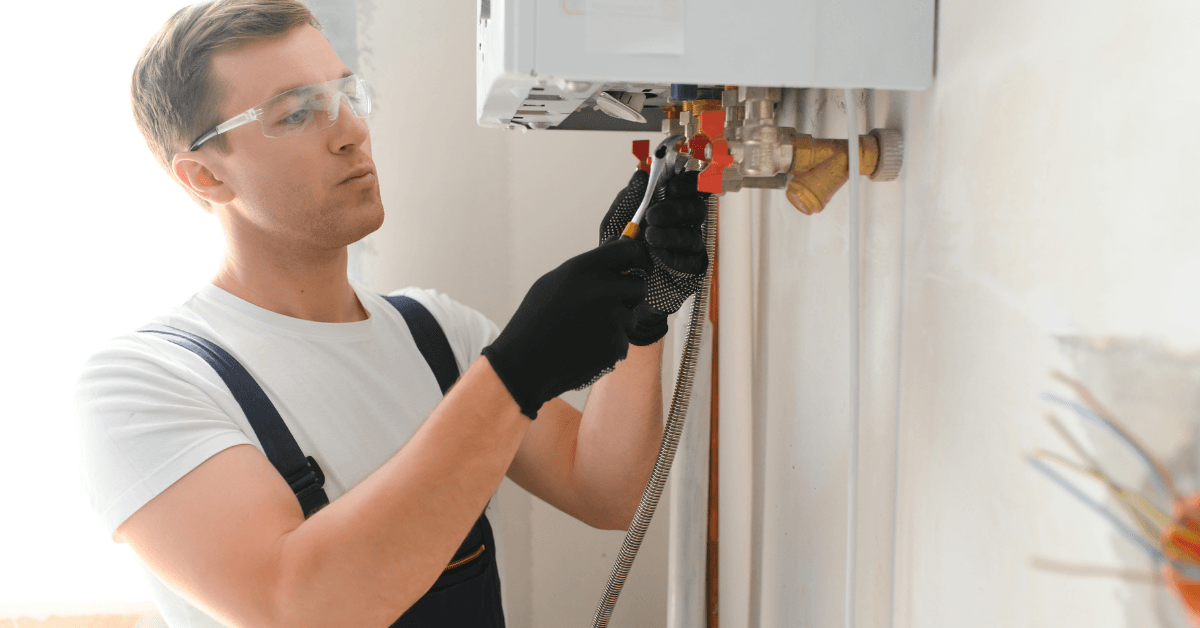
Using someone who isn’t properly registered can have serious consequences. Poor workmanship can put your household at risk, your insurance may be voided, and non-compliant gas work can delay or even prevent the sale of your property until it has been corrected.
Before agreeing to any gas geyser repair, ask for the technician’s SAQCC Gas registration number and verify it at the official SAQCC website.
Absolute Plumbing Cape Town carries out gas work in line with these requirements and can advise you on keeping your gas geyser installation safe and compliant.
Common Gas Geyser Problems, Explained Simply
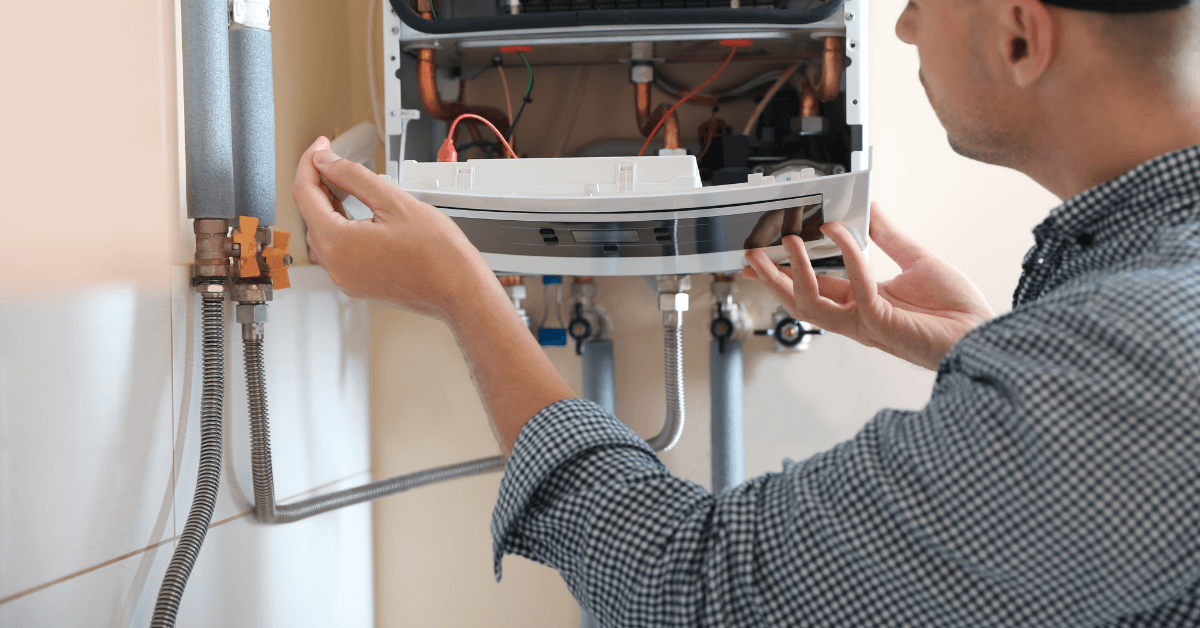
Most gas geyser problems come down to a handful of common faults. Some have simple explanations, while others require a qualified gas geyser technician. Understanding the symptoms can help you explain the problem more clearly and avoid unnecessary guesswork.
No Hot Water at All
If your gas geyser is not working, don’t immediately assume the unit has failed. In many cases, the cause is surprisingly simple.
Start by checking whether your LPG cylinder is empty and whether the gas supply valve is fully open. If both are fine, the problem could be a faulty igniter, flat ignition batteries, or water pressure that is too low to activate the geyser. Instantaneous gas geysers only ignite when sufficient water flows through the unit, so low pressure can prevent them from switching on.
Before calling anyone for gas geyser repair near me, check these basics first

Lukewarm Water or Temperature That Keeps Changing
If you’ve ever had the water suddenly turn cold halfway through a shower, you’re not alone. It’s a problem many Cape Town homeowners know well.
Fluctuating temperatures can be caused by a partially blocked burner, a thermostat that’s beginning to fail, or scale building up inside the heat exchanger. In some cases, there may be nothing mechanically wrong at all. Your gas geyser may simply be too small for your household’s hot water demand, especially if multiple taps or showers are being used at the same time.
An annual gas geyser service helps prevent many of these issues by keeping burners clean and ensuring the unit operates efficiently.
Water Leaking from the Unit
Not every leak means your gas geyser has failed. A drip from a pipe connection, valve or fitting is usually a straightforward repair. Water coming from the unit itself is much more serious. However, if water is leaking from the gas geyser itself, the problem is usually more serious and may indicate internal damage or a failed heat exchanger.
If you notice your gas geyser leaking water from the unit itself, switch it off and arrange a professional inspection. Avoid tightening any components on the gas side of the appliance.
Pilot Light Keeps Going Out
If your gas geyser pilot light won’t stay lit, the thermocouple is often the culprit. A thermocouple is a small safety device that detects whether the pilot flame is burning. If the flame goes out, it automatically shuts off the gas supply to prevent dangerous gas build-up.
As thermocouples wear out over time, they can stop recognising the flame correctly, causing the pilot light to keep going out. The good news is that replacing a worn thermocouple is one of the most routine and affordable gas geyser repairs.
Strange Noises
Gas geysers should operate fairly quietly, so unusual sounds shouldn’t be ignored. A rumbling or gurgling noise often indicates scale buildup inside the heat exchanger, which reduces efficiency and restricts water flow. Rattling sounds are usually caused by a loose panel or component that has vibrated over time.
A booming or thumping sound when the unit ignites is more concerning. This is called delayed ignition and is a warning sign that shouldn’t be ignored. If this happens, switch the unit off and contact a registered gas geyser technician immediately. Do not continue using the appliance.
The Unit Is Showing an Error Code
Many modern gas geysers display an error code when something is wrong. This is the unit doing its job by helping identify the fault.
Before calling for gas geyser repair near me, make a note of the code displayed. Sharing it with your technician can help identify the likely fault before they arrive, potentially reducing both repair time and costs.
Brands such as Bosch, Rinnai and Paloma commonly use error codes to identify faults ranging from ignition failures to water flow problems.
Orange or Yellow Flame Instead of Blue
A healthy gas flame should always burn blue. If the flame appears orange or yellow, the gas isn’t burning cleanly and may produce carbon monoxide, which is odourless and dangerous.
If you notice anything other than a steady blue flame, switch the gas geyser off immediately and arrange a professional inspection. Do not run the unit while waiting for your appointment.
What You Can Safely Check Yourself Before Calling a Plumber
Before calling a plumber, there are a few simple visual checks you can carry out safely. These are visual checks only. Do not open the unit, do not touch any gas connections, and do not attempt to relight a gas geyser that keeps failing to ignite.
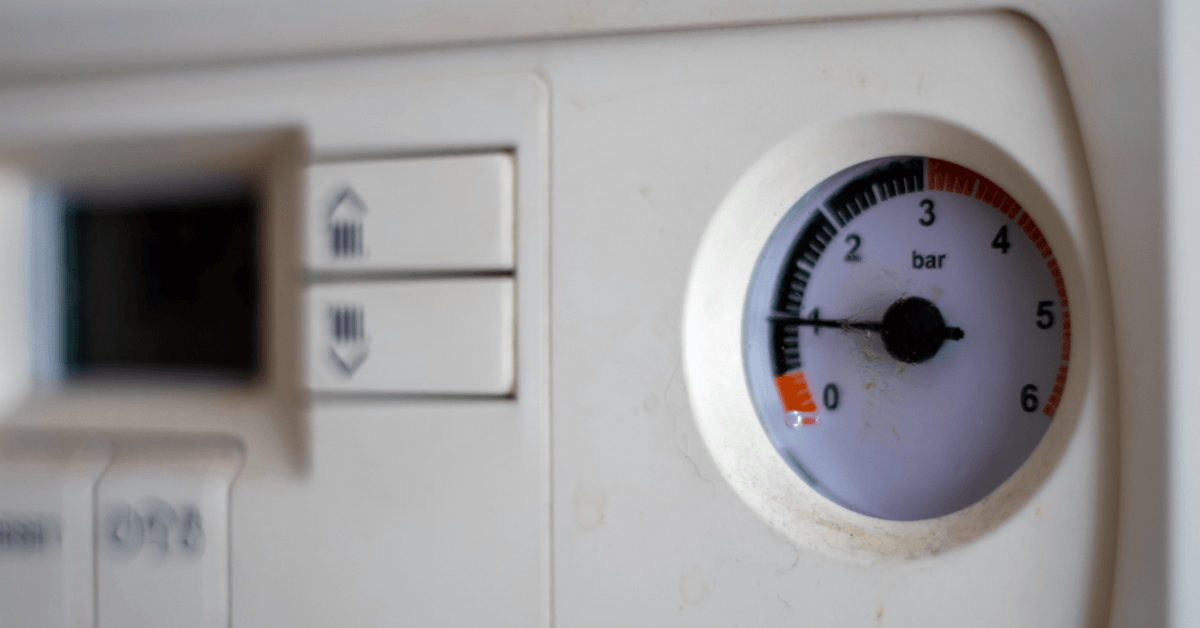
Check the following:
- Is the LPG cylinder empty? If you have a gauge, check the reading, or gently shake the cylinder to estimate whether any gas remains.
- Is the gas supply valve fully open?
- Is there an error code displayed? Write it down before calling.
- Has a circuit breaker tripped? Some gas geysers with electronic ignition need power to work.
- Is your home’s water pressure unusually low? Run a nearby cold tap to check. Low pressure can stop the gas geyser from activating.
If none of these checks solves the problem, it’s time to call a professional. Do not keep trying to ignite a gas geyser that repeatedly fails to start. Repeated attempts to ignite a faulty unit can worsen the problem and pose a safety risk.
If You Smell Gas Near Your Geyser, Do This
If you smell gas near your geyser, treat it as an emergency.
- Do not switch any lights or plugs on or off
- Do not create any sparks
- Open windows and doors
- Leave the area if the smell is strong
- Call a registered gas technician or emergency services from outside
- Do not attempt to find the leak yourself
Do You Need a Certificate of Compliance?
A Gas Certificate of Compliance (CoC) is an official document confirming that your gas installation has been inspected and meets South African safety standards.
You’ll need a CoC whenever a new gas installation is completed, or when the gas line is modified or extended. Whether a repair requires a new Certificate of Compliance depends on the scope of work. Ask your technician whether the specific repair triggers a compliance re-certification, and always confirm the system remains in a safe, compliant condition afterwards.
Gas Certificates of Compliance are now issued digitally through SAQCC Gas’s system. Once the work is completed, ask your technician to send you the digital certificate for your records. A valid CoC is especially important when selling your home or when making certain insurance claims.
Repair or Replace? How to Decide
Many homeowners assume that replacing the entire unit is the only option. In reality, a gas geyser repair is often the more cost-effective choice. Repair usually makes sense when a single component has failed, the unit is under eight to ten years old, and the repair cost is well below half the price of a new unit.
Replacement is usually the better option when the heat exchanger has failed, the unit is over ten years old and experiencing repeated faults, or the geyser is too small for the household’s hot water demand. With proper gas geyser maintenance, a well-made unit can last up to 20 years, although most households can expect around 10 to 15 years of reliable use.
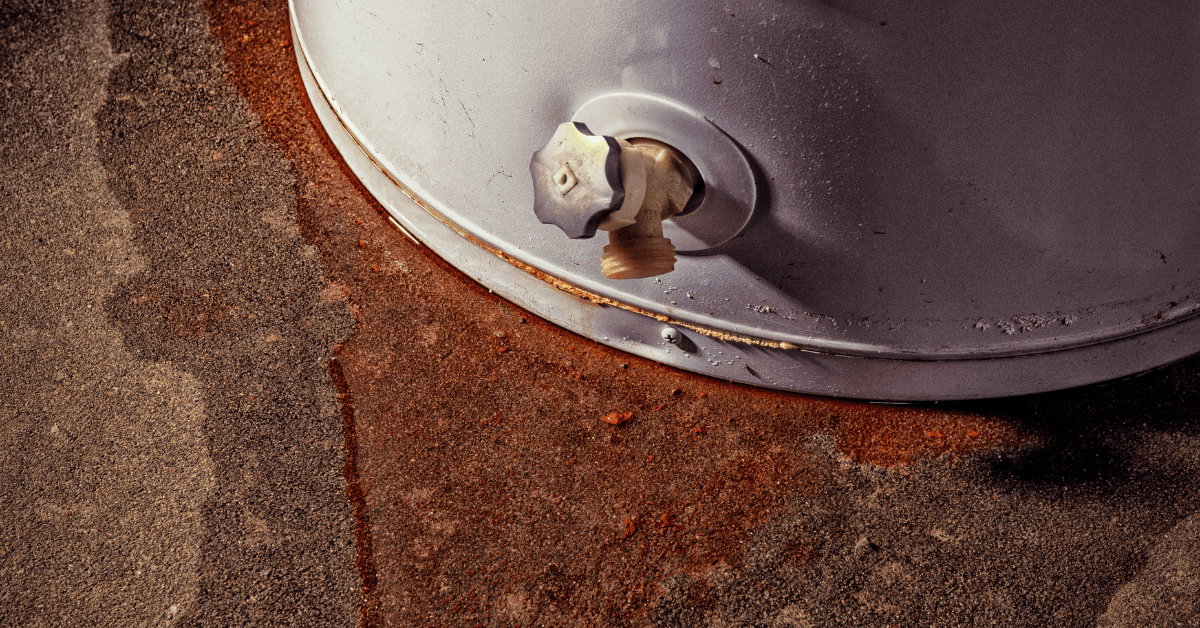
In Cape Town, outdoor installations should also be considered carefully. Salt-laden coastal air can cause external fittings and regulators to corrode faster than in inland areas, especially if the unit is already exposed or ageing.
When assessing whether to repair or replace, it’s important to consider the unit’s overall condition rather than a single fault.
Absolute Plumbing will always give a clear, honest assessment of whether a repair or replacement makes the most practical sense for your situation. We work on all major brands, including Bosch, Rinnai, Paloma, Dewhot and Atlas.
A Note on Cylinder Size for Cape Town Households
The size of your LPG cylinder can directly impact your gas geyser’s performance. A family of four typically uses about 19 kg of LPG per month in summer, rising to 40-60 kg in winter as hot water demand increases.
If you live in a flat, regulations limit you to a 9 kg gas cylinder for indoor installations. Houses are permitted up to 19 kg. Some larger gas geysers require a 19 kg cylinder to operate properly, which may make them unsuitable for certain apartment installations.
If your geyser feels underpowered or struggles to maintain a consistent hot water supply, the issue may not be the unit itself. Cylinder size or gas supply pressure could be affecting performance. If you’re unsure, it’s best to have the installation assessed to confirm the correct setup.
Trust Absolute Plumbing for Gas Geyser Repair in Cape Town
A gas geyser fault is not something to ignore, whether it is no hot water, unusual noises, a water leak, or a gas smell near the unit. Now you know what to look for, what you can safely check yourself, and when it is time to call a professional.

When you’re searching for gas geyser repair near me, you want a company that combines experience, compliance, and honest advice. Absolute Plumbing Cape Town was founded by Chris Maujean in 2010 and has grown into a team of more than 45 qualified plumbers serving Cape Town and the surrounding areas. We are registered with the City of Cape Town and the Plumbing Industry Registration Board (PIRB), and all gas work is carried out in accordance with SANS 10087-1 (2024 edition), with a digital Gas Certificate of Compliance issued where required. With upfront pricing, no hidden costs, a 12-month workmanship guarantee and full insurance, contact us for fast, qualified gas geyser repair across Cape Town and surrounds.
FAQ
Can I repair a gas geyser myself?
No. By law, all gas appliance repairs must be carried out by a technician registered with SAQCC Gas. DIY repairs are illegal and can lead to gas leaks, carbon monoxide exposure, or fire.
How do I know if a gas technician is properly registered?
Ask for their SAQCC Gas registration number and verify it at saqccgas.co.za. Registered technicians will also issue a digital Certificate of Compliance after any installation or modification work.
How long does a gas geyser repair take?
Most standard gas geyser repairs take between 30 minutes and two hours. Simple faults, such as a thermocouple or igniter replacement, are usually completed within an hour. More complex issues may require parts and a follow-up visit.
Is it safe to keep using my gas geyser if it is faulty?
It depends on the fault. If there is no gas smell and no booming sound on ignition, it may be safe to use temporarily. If you smell gas, see a yellow or orange flame, or hear a loud bang when it ignites, switch it off immediately and call a technician.
What should I do if I smell gas near my geyser?
Do not switch lights or electrical appliances on or off. Open windows and doors, leave the area if the smell is strong, and call a registered technician or emergency services from outside the property.
Do I need a Certificate of Compliance for a gas geyser repair?
Not for like-for-like parts replacement, such as a thermocouple or igniter. You do need one for a new installation or any modification to the gas line. It is also required when selling a property.
How much does a gas geyser repair cost in Cape Town?
Costs vary depending on the fault and parts required. Contact Absolute Plumbing for a clear quote with upfront pricing and no hidden costs.
How long does a gas geyser last?
A well-maintained gas geyser can last up to 20 years, although most households get around 10 to 15 years of reliable use. Coastal homes in Cape Town may experience faster wear on external components due to salt air.
How often should a gas geyser be serviced?
Once a year. A service typically includes cleaning the burner, checking the flue and gas connections, and ensuring the unit is operating safely and efficiently.
What brands of gas geyser does Absolute Plumbing repair?
We work on all major brands, including Bosch, Rinnai, Paloma, Dewhot, and Atlas.


