
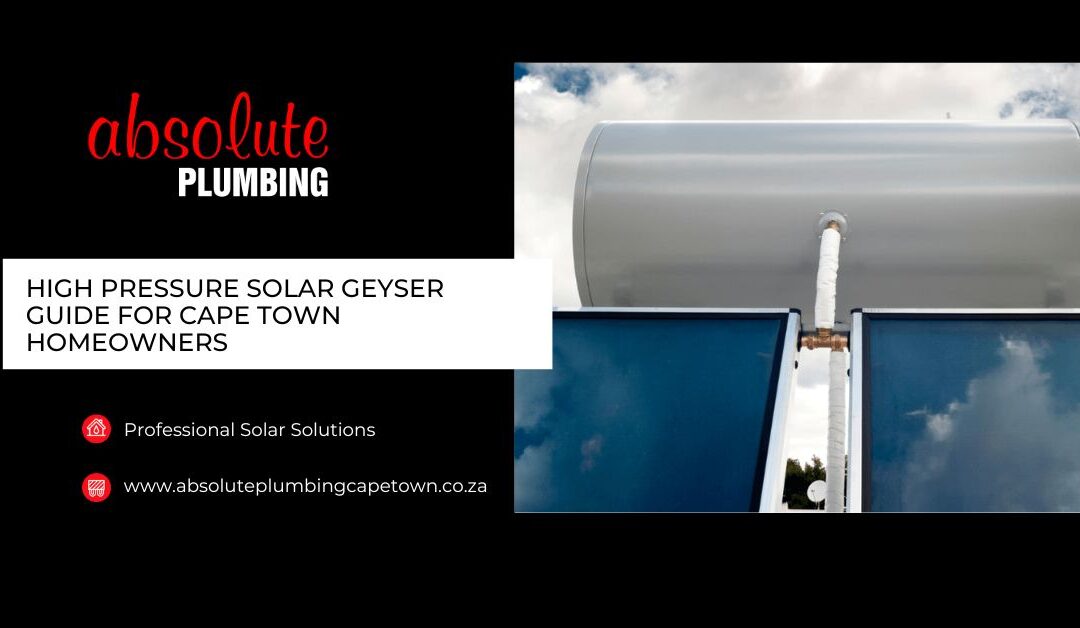
Cape Town homeowners considering solar geysers near me quickly encounter the choice between high- and low-pressure systems, and most are unsure what the difference means in practice. A high pressure solar geyser is often recommended for modern homes, especially those with multiple bathrooms, mixer taps, and a strong mains water supply. But it also raises questions about pricing, installation, and whether it is the right system compared to other options.
This guide explains how high pressure solar geysers work, who they suit, what they cost, and whether one is right for your home.
What Is a High Pressure Solar Geyser?
A high pressure solar geyser operates at mains water pressure, typically between 400 and 600 kPa, so the hot water delivery pressure matches the cold water supply pressure.
It consists of solar collectors mounted on the roof, a storage tank (either on the roof or inside the ceiling), and a circulation system that transfers heat from the collectors to the water.

High pressure geyser systems are suitable for homes with standard mains-pressure plumbing, modern showers, mixer taps, and multiple bathrooms.
They differ from low pressure systems, which rely on gravity feed and are typically mounted in a roof-mounted tank. Low pressure systems are cheaper but deliver lower water pressure.
High Pressure vs Low Pressure Solar Geyser
Understanding the difference between high pressure and low-pressure solar geysers is key when choosing the right system for your home. The comparison below breaks down the main factors that affect performance, suitability, cost, and installation.

- Water pressure: A high pressure solar geyser delivers mains-equivalent pressure. Low pressure systems rely on gravity and deliver lower flow.
- Suitability: High pressure systems suit modern homes with mixer taps and multiple bathrooms. Low pressure systems suit simpler installations or properties with low mains pressure.
- Cost: High pressure systems cost more upfront due to more complex installation and additional components.
- Tank location: High pressure systems can be installed inside the ceiling, keeping the roof cleaner. Low pressure systems are typically roof-mounted.
- Reliability during power outages: Both systems provide hot water during outages, whether from load shedding, storm damage, or ageing municipal infrastructure, because they rely on solar heat rather than grid electricity for heating. An electric backup element may be included for cloudy days.
In practice, high pressure systems maintain strong, consistent water flow even when multiple taps or showers are used simultaneously. Low pressure systems can experience reduced flow under the same conditions, especially in higher-demand households. This is why high pressure systems are commonly preferred in modern homes with multiple bathrooms.
High Pressure Solar Geyser Prices in Cape Town
The high pressure solar geyser price varies depending on system size, brand, collector type (flat plate vs evacuated tube), and installation complexity.
As a general guide, fully installed high pressure systems in South Africa typically range from R15,000 to R22,000 for a 100L system, R22,000 to R35,000 for the more common 150L to 200L household size, and R38,000 to R55,000 for a larger 300L system. Most homeowners see a return on this investment within three to five years through electricity savings.
In Cape Town, pricing can also fluctuate with seasonal demand and installer availability, especially during peak periods when homeowners prepare for winter or during periods of higher electricity demand.
As a general rule, larger systems, such as 300L solar geysers, cost more than smaller 100L solar geysers, both in equipment and installation requirements. However, the final price is always influenced by the specific conditions of the property, and an accurate quote can only be confirmed once the roof structure, plumbing layout, and installation distance have been assessed on site.
Factors Affecting Installation Cost
- Roof type and pitch, which affect installation access and mounting requirements
- The distance between collectors and storage tank, which influences pipe runs and system efficiency
- Whether a backup electric element is included for cloudy periods
- Plumbing upgrades required in older homes
- Compliance and certification requirements for insurance and property transfers
Because of these variables, two homes with the same system size can still have very different installation costs. While a high-pressure geyser system typically requires a higher upfront investment than a standard electric geyser, it can significantly reduce long-term electricity usage, making it a cost-effective solution for many high-usage households.
Benefits of a High Pressure Solar Geyser in Cape Town
Cape Town is one of the best locations in South Africa for solar water heating systems due to its high number of sunshine hours, averaging around 3,000 hours per year.
During summer months, Cape Town’s strong solar exposure allows systems to reach optimal heating efficiency quickly, while winter performance remains stable due to consistent daylight hours even on cooler days.

This consistent sunlight exposure means that properly sized systems can perform efficiently throughout most of the year. Even during colder months, solar gain remains sufficient to reduce reliance on electrical backup systems, making it a practical solution for long-term energy savings in residential properties.
Reduced Electricity Consumption
Water heating research conducted by Lawrence Berkeley National Laboratory in partnership with the University of Cape Town found that electric geysers account for around a third of household electricity use nationally, with the figure climbing to 40- 50% or more in higher-demand homes. A high pressure solar geyser can significantly reduce this by using solar energy as the primary heat source instead of grid electricity.
Many homeowners only notice the full impact after switching, especially in households with high hot water demand such as families with multiple morning routines or evening usage peaks.
Power Outage Resilience
South Africa’s electricity supply has become more stable in recent years, but outages can still happen from time to time. Solar geysers heat water independently of the grid, so hot water keeps flowing regardless of the cause. An electric backup element will not function during an outage, but the solar heating system continues to operate as long as sunlight is available.
Environmental Impact
South Africa’s electricity grid still relies heavily on coal, so cutting electricity demand for water heating has a real, ongoing emissions benefit rather than a marginal one. Since a high pressure solar geyser can cut water heating electricity use by 60-80%, switching removes a meaningful, ongoing source of household emissions, while also easing pressure on an already strained national grid.
Long Lifespan
A well-maintained high pressure solar geyser can last 15 to 20 years, compared with the 10 to 12 year average lifespan of a standard electric geyser. Over 20 years, that can mean avoiding one or even two full geyser replacements, along with the associated call-out, removal, and installation costs each time. This makes a solar system less a household upgrade and more a long-term piece of home infrastructure, similar in mindset to a roof or a geyser enclosure rather than an appliance you expect to replace every decade.
What to Expect During a High Pressure Solar Geyser Installation
Installation of a high pressure solar geyser should always be carried out by a licensed plumber with experience installing solar geysers.
Because high pressure systems operate under mains pressure, precision during installation is essential. Small errors in pipe alignment or circulation setup can affect performance over time, which is why correct installation practices play a major role in ensuring long-term system efficiency and durability.

Typical Installation Process
A professional installation usually includes:
- Site assessment and water usage evaluation
- Roof inspection to confirm structural suitability
- Mounting of solar collectors
- Installation or replacement of the storage tank
- Connection of the circulation system
- Installation of backup electrical elements if required
- System testing and pressure checks
- Issuing a Certificate of Compliance (COC)
A Certificate of Compliance is required for all new geyser installations in Cape Town for insurance and property sale purposes.
For homeowners planning an upgrade or new system, more details can be found on the geyser installation.
Should a Solar Geyser Be Installed by a Professional?
Yes. High pressure systems operate at mains pressure, so incorrect installation can lead to leaks, pressure issues, or system failure. Proper installation ensures:
- Safety under pressure conditions
- Correct circulation between collectors and the tank
- Compliance with SANS 10106 regulations
- Long-term system efficiency
Is a High Pressure Solar Geyser Right for You?
For Cape Town homeowners, a high pressure solar geyser is one of the most practical investments available, given the city’s sunshine, rising electricity costs, and the ongoing risk of power interruptions. Whether you are comparing prices, planning a new installation, or upgrading an existing system, choosing the correct size and a professional installation approach is essential for long-term performance and safety.
Absolute Plumbing Cape Town has over 15 years of general plumbing experience and a team of 45 licensed plumbers, offering free quotes and professional, SANS 10106-compliant installations. Call 084 872 2758 today to learn more about solar geyser installation in Cape Town.
FAQ
What is the difference between a high pressure and low pressure solar geyser?
A high pressure solar geyser operates at mains pressure (typically 400 to 600 kPa) and delivers strong, consistent water flow even with multiple taps running. A low pressure system is gravity-fed, cheaper to install, but delivers lower and less consistent water pressure.
How much does a high pressure solar geyser cost in Cape Town?
A fully installed high pressure solar geyser in Cape Town typically costs R15,000 to R22,000 for a 100L system, R22,000 to R35,000 for the more common 150L to 200L size, and R38,000 to R55,000 for a 300L system. Final pricing depends on tank size, brand, collector type, and installation complexity, but most homeowners recover the cost within three to five years through electricity savings.
What size solar geyser do I need?
Geyser size depends mainly on how many people are in the household:
- 100L: one to two people
- 150L: two to three people
- 200L: three to four people
- 300L: four to six people, or households with high hot water demand
Households with multiple bathrooms, back-to-back showers, or frequent guests should size up rather than down, since running short of hot water is far more disruptive than a slightly higher upfront cost.
Does a solar geyser work during load shedding?
Yes. Solar geysers heat water using sunlight, not electricity, so they keep working during load shedding, storm-related outages, or local infrastructure faults. The electrical backup element will not function without grid power, but the solar collector itself is unaffected.
How long does a high pressure solar geyser last?
With proper maintenance, a high pressure solar geyser can last 15 to 20 years, compared with 10 to 12 years for a standard electric geyser, meaning it can outlast one or even two full electric geyser replacement cycles.


