
If your electricity bill keeps climbing, your geyser could be one of the reasons. Heating water uses a significant amount of energy, leading many homeowners to consider more efficient alternatives.
A hot water heat pump uses heat from the surrounding air to warm the water in your geyser, potentially reducing electricity consumption compared with a standard electric geyser. However, the upfront cost, installation requirements and ongoing maintenance are worth considering before making the switch.
This guide explains how a heat pump works, its potential savings and drawbacks, and whether it’s the right choice for your home.
What Is a Hot Water Heat Pump?
A hot water heat pump is an energy-efficient system that uses heat from the surrounding air to heat water for your home. Unlike a conventional electric geyser, which heats water directly using an electrical element, a heat pump transfers heat into the water using electricity to power the process.

The heated water is stored in a geyser for showers, baths, washing dishes and other household tasks. A heat pump hot water heater can be installed as a separate unit connected to a geyser or as an integrated system with its own storage tank. The right option depends on your home’s plumbing, hot water needs and available installation space.
How Does a Heat Pump Work With a Geyser?
A heat pump transfers heat from the surrounding air into the water stored in a geyser, rather than generating all the heat directly using electricity.
A hot water heat pump uses a refrigerant to absorb and transfer heat through a continuous cycle. Here’s how it works:
- Air enters the unit. A fan draws surrounding air across the evaporator, where the refrigerant absorbs heat.
- The refrigerant heats up. A compressor increases the refrigerant’s pressure and temperature.
- Heat moves into the water. A heat exchanger transfers heat from the refrigerant to the water in the geyser.
- The cycle repeats. The refrigerant cools and expands before absorbing more heat from the air.
The heated water remains stored in the geyser until it’s needed for showers, baths and other household tasks.
Because the system transfers heat rather than relying entirely on electrical resistance heating, it can deliver more heat energy than the electricity it consumes. However, it still needs electricity to power the compressor, fan and controls. Some systems also include a backup electric element to help meet hot water demand.
How Much Electricity Can a Heat Pump Geyser Save?
A hot water heat pump can reduce electricity consumption compared with a conventional electric geyser because it transfers heat from the surrounding air rather than relying entirely on an electrical element.
However, actual savings vary between households. Several factors affect how much electricity a heat pump geyser uses.
| Factor | How it affects electricity use |
| Household demand | More people using hot water means the heat pump needs more electricity to heat it. |
| Climate | Heat pumps use less electricity in warmer air and more in colder air. |
| Installation | Poor airflow around the unit can make it work harder and use more electricity. |
| Existing system | The amount you save depends on how much electricity your current geyser uses. |
| System sizing | A heat pump that is too small may struggle to meet demand and use more backup heating. |
| Temperature settings | Setting the water temperature higher generally increases electricity use. |
To estimate your potential savings, compare your current electricity consumption with the proposed system’s expected running costs. A professional assessment can help account for your household’s hot water needs and installation conditions.
Remember to factor in the upfront purchase and installation costs. The time needed for electricity savings to offset this initial investment depends on the system price and the actual reduction in running costs.
What Are the Downsides of a Heat Pump Geyser?
Although a hot water heat pump can reduce electricity consumption, the upfront cost, installation requirements and maintenance are worth considering before making the switch.

1. Higher Upfront Costs
A heat pump geyser generally costs more to purchase and install than a conventional electric geyser. The final price depends on the system, installation requirements and whether your existing geyser can be retained. Electricity savings may offset the initial investment over time, but the payback period varies between households.
2. Noise From the Unit
The fan and compressor produce noise while the heat pump operates. Noise levels vary by model, so check the manufacturer’s specifications and avoid positioning the unit near bedroom windows or entertainment areas.
3. Space and Airflow Requirements
A heat pump needs sufficient airflow to extract heat from the surrounding air. Restricted airflow can reduce efficiency, while insufficient clearance can make servicing difficult. Some models are designed for outdoor use, while others can be installed indoors with appropriate ventilation.
4. Condensate Drainage
Heat pumps produce condensation during operation. This water needs to drain away properly to prevent pooling or damp areas. Your installer should plan suitable drainage based on the property’s layout.
5. Hot Water Recovery Time
Depending on the model and operating conditions, a heat pump may take longer to reheat a depleted geyser than a conventional electric element. This can be noticeable when several people need hot water consecutively. Correct system sizing and, where available, backup electric heating can help meet peak demand.
6. Regular Maintenance
Heat pumps have mechanical components that require periodic inspection. Restricted airflow, blocked drains, faulty sensors or refrigerant-system problems can affect performance. Follow the manufacturer’s servicing schedule and arrange professional attention if you notice unusual noises, repeated shutdowns, reduced heating performance or unexpected increases in electricity consumption.
Where Can a Heat Pump Be Installed?
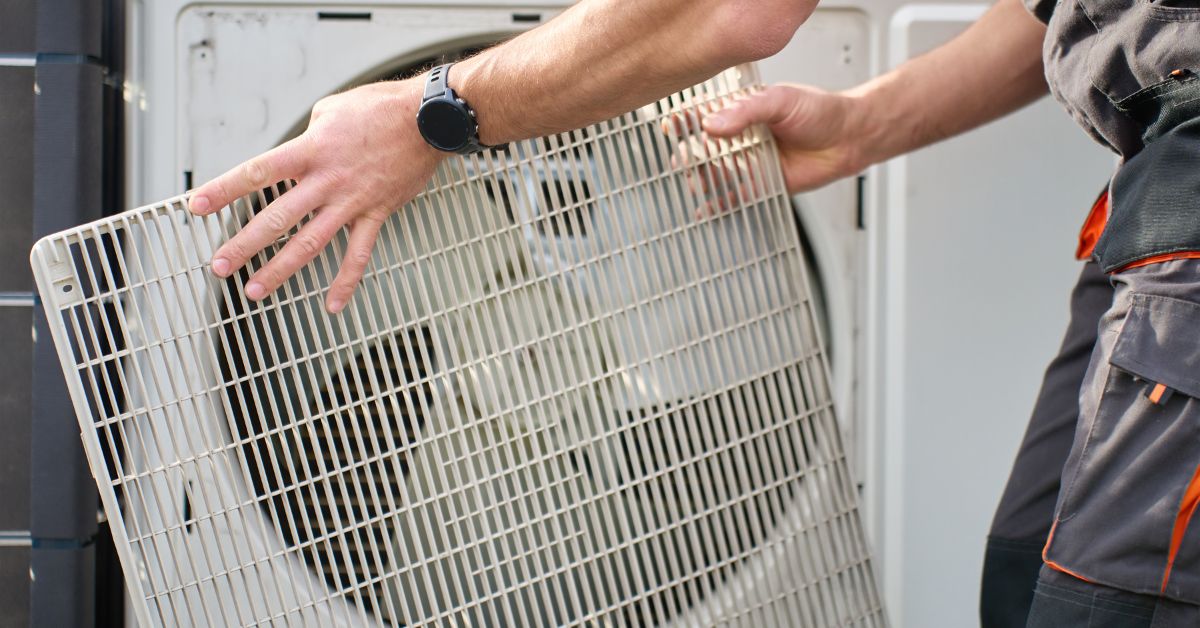
A hot water heat pump can be installed indoors or outdoors, depending on the model and the property’s layout. The location needs to provide sufficient airflow, space for maintenance and a suitable way to drain condensation.
Before installation, a professional should assess the following:
- Space and clearance: The unit needs enough room for airflow and access for future servicing.
- Ventilation and air supply: The heat pump must be able to draw in sufficient air to operate efficiently. Enclosed spaces may require additional ventilation or ducting, depending on the model.
- Condensate drainage: A suitable drainage route is needed to remove condensation and prevent water from collecting around the unit.
- Proximity to the geyser: The distance between a separate heat pump unit and the geyser affects pipework requirements and potential heat loss.
- Access for servicing: The unit should be positioned where a technician can safely reach its components when maintenance or repairs are needed.
A suitable location depends on the specific heat pump, so an installation assessment is important before choosing where it will go. Restricted airflow, insufficient clearance or difficult drainage can make an otherwise convenient spot unsuitable.
Heat Pump Geyser vs Solar Geyser
Both heat pumps and solar geysers can reduce the electricity needed to heat water, but they use different energy sources. A heat pump extracts heat from the surrounding air, while a solar geyser captures energy from sunlight.
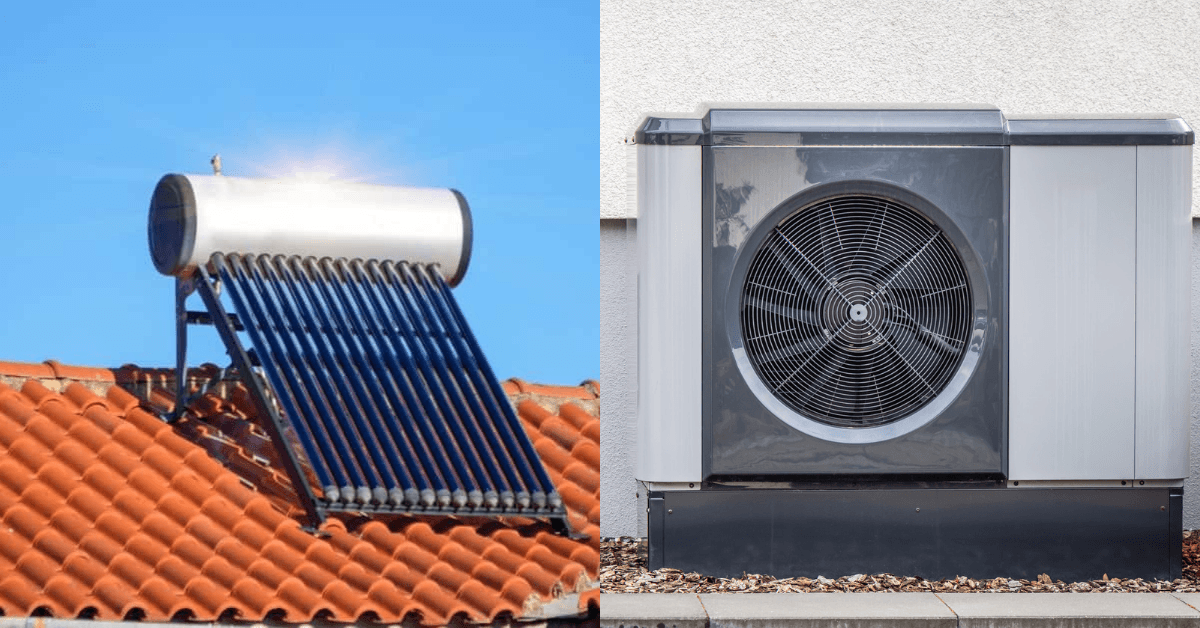
When comparing a heat pump geyser vs solar geyser, consider the installation costs, available space, weather conditions and maintenance requirements.
| Consideration | Hot water heat pump | Solar geyser |
| How it works | Transfers heat from the surrounding air into the water | Uses solar collectors to capture energy from sunlight |
| Upfront infrastructure | Heat pump unit, compatible storage tank and connections | Storage tank, solar collectors, pipework and mounting arrangements |
| Weather dependence | Efficiency is affected by surrounding air temperature | Performance depends on sunlight and weather conditions |
| Electricity use | Powers the compressor, fan and controls; backup heating may also use electricity | May power a circulation pump, controls or backup heating |
| Installation requirements | Requires airflow, space, condensate drainage and servicing access | Requires suitable collector placement, space and pipework |
| Maintenance | Mechanical components, airflow and drainage need periodic attention | Collectors, pipework and connections need periodic inspection |
Neither system is automatically better for every property. A heat pump may suit a home without suitable space for solar collectors, while a solar geyser may be a good option where sunlight and installation conditions are favourable.
Compare installation costs, expected electricity use and maintenance requirements before deciding which system suits your home.
Is a Heat Pump Geyser Right for Your Home?
A hot water heat pump may be a worthwhile investment if your household uses a lot of hot water and you want to reduce electricity consumption. However, its suitability depends on your budget, property and current hot water usage.
A heat pump geyser may be a good fit if:
- Your household uses hot water regularly.
- Heating water accounts for a significant part of your electricity consumption.
- You have sufficient space, airflow and drainage for installation.
- You can afford the upfront equipment and installation costs.
- The expected electricity savings justify the investment.
- You have access to suitable servicing and repair support.
It may be less practical if your household uses very little hot water, installation requires extensive alterations, or the initial cost outweighs the likely savings.
Before deciding, request a quotation covering equipment, installation, necessary plumbing alterations and maintenance. Compare the estimated running costs with your current electricity consumption to assess whether the investment makes financial sense.
Can You Add a Heat Pump to an Existing Geyser?
Yes, some hot water heat pumps can be connected to an existing electric geyser. This is known as a retrofit installation, but compatibility depends on the heat pump and storage tank.
Before proceeding, a qualified installer should check:
- Geyser capacity: Whether the tank can meet your household’s hot water demand.
- Compatibility: Whether the tank, connections and controls meet the manufacturer’s requirements.
- Condition: Whether the existing geyser is in good working order.
- Installation space: Whether there is enough room for the unit, airflow, pipework and condensate drainage.
- Backup heating: Whether the existing electric element can be retained.
If your geyser is compatible and in good condition, retaining it may reduce installation costs. If it is unsuitable or nearing the end of its service life, replacing it may be more practical.
Arrange a professional assessment before buying equipment to confirm which option suits your existing system.
What Maintenance Does a Heat Pump Need?
Regular maintenance helps a hot water heat pump operate efficiently and identify problems before they become costly repairs. Follow the manufacturer’s servicing recommendations and check the following:
- Keep airflow clear. Remove leaves and loose debris around the unit where safe to do so.
- Check the condensate drain. Look for blockages or water pooling around the unit.
- Arrange professional servicing. A technician can inspect the fan, electrical connections, controls and refrigerant system, where applicable.
- Monitor performance. Watch for changes in heating time, electricity consumption or operating noise.
Never open electrical compartments or attempt to handle refrigerant yourself.
When Do You Need Heat Pump Geyser Repairs?
If your heat pump stops heating properly, repeatedly switches off or starts making unusual noises, it may need professional attention.
Warning signs include:
- Water that is consistently cooler than expected.
- A sudden increase in electricity consumption.
- Unusual rattling or vibration.
- Water pooling around the unit.
- Error codes or repeated shutdowns.
- Unusually long heating times.
These symptoms may indicate restricted airflow, drainage problems, faulty sensors or mechanical issues. A professional diagnosis can identify the cause before parts are replaced.

For heat pump geyser repairs, choose a technician familiar with your system. Absolute Plumbing Cape Town offers heat pump installation and servicing to help maintain your hot water system. Contact our team to discuss your requirements.
Frequently Asked Questions About Hot Water Heat Pumps
How does a heat pump work with a geyser?
A heat pump transfers heat from the surrounding air into the water stored in a geyser. A refrigerant absorbs heat, a compressor raises its temperature, and a heat exchanger transfers that energy to the water. This process uses electricity but can be more efficient than conventional electric heating.
Does a heat pump geyser use electricity?
Yes, a heat pump geyser uses electricity to power its compressor, fan and controls. Some systems also use a circulation pump or backup electric element. However, because the heat pump transfers heat rather than generating all of it directly, it can use less electricity than a conventional electric geyser.
Is a heat pump cheaper to run than a standard geyser?
Yes, a heat pump can be cheaper to run because it typically uses less electricity to heat the same amount of water. Actual savings depend on the system’s efficiency, installation, household consumption, electricity tariff and operating conditions. Compare estimated running costs with the upfront installation price to assess its value.
Is a heat pump better than a solar geyser?
Not necessarily. A heat pump extracts heat from surrounding air, while a solar geyser uses solar collectors to capture sunlight. The better option depends on your property’s roof space, solar exposure, installation requirements, household hot water demand and budget. Both systems may require supplementary heating under certain conditions.
Are heat pump geysers noisy?
Yes, heat pump geysers produce some noise because they contain a fan and compressor. The volume varies by model and installation location. Check the manufacturer’s noise specifications before purchasing, and choose a position away from bedroom windows and entertainment areas where operating noise could disturb occupants or neighbours.
Can a heat pump work with my existing geyser?
Yes, some heat pumps can be connected to existing geysers, provided the systems are compatible. An installer must check the tank’s capacity and condition, connections, controls and installation requirements. If the existing geyser is unsuitable or nearing the end of its service life, replacing it may be the better option.


