
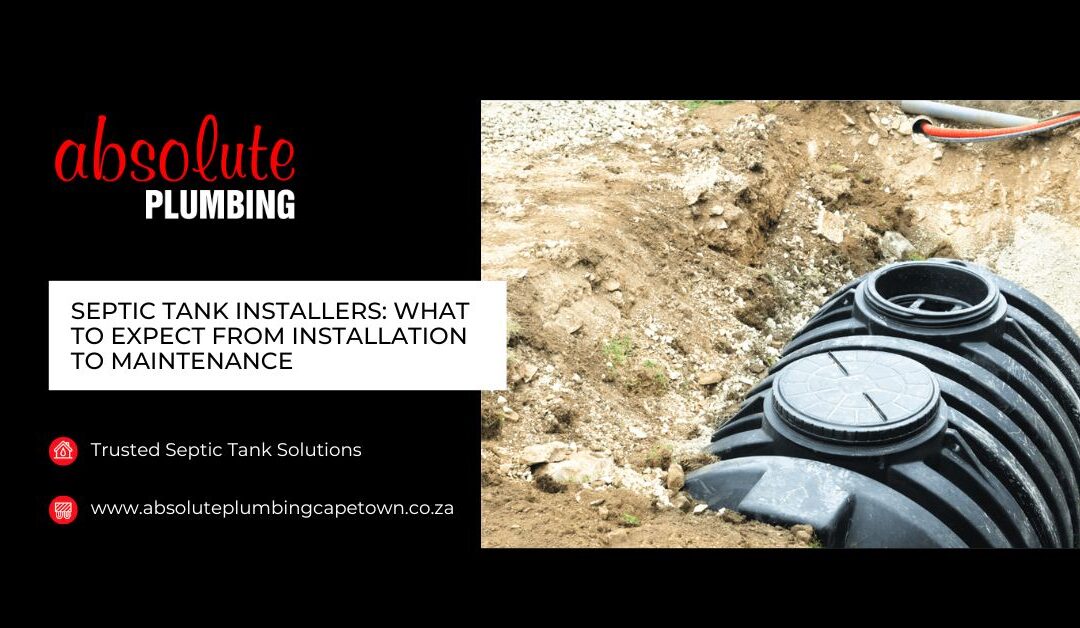
Installing a septic system is one of the most significant infrastructure decisions a property owner can make, and one of the easiest to get wrong. In South Africa, all septic tank installations must comply with SANS 10400-P, the National Building Regulations standard that governs system design, soil suitability, tank sizing, and environmental protection.
Getting it right from the start is why choosing qualified septic tank installers matters. It protects your property, prevents groundwater contamination, and avoids the costly repairs that poor installation almost always leads to.
This guide explains what professional septic tank installers do, what the installation process involves, and what South African homeowners need to know before work begins.
What Do Septic Tank Installers Actually Do?
Professional septic tank installers do far more than simply place a tank underground. Their role includes full system planning, environmental assessment, and ensuring compliance with local regulations.
They evaluate your property, determine the correct system design, and ensure wastewater is safely processed without damaging surrounding soil or water sources. Experienced installers also take long-term performance into account, ensuring the system can handle household demand efficiently over time.
Without qualified installers, systems often fail prematurely due to poor design or incorrect sizing.
A Step-by-Step Guide to Septic Tank Installation
Installing a septic system happens in clear stages, from assessing the land to final compliance checks. Each step builds on the last to ensure the system is safe, legally compliant, and correctly designed for the property’s specific conditions.
1.Understanding Your Property
Every property behaves differently, and this first step determines whether a septic system is even viable.
A full septic tank site assessment is carried out by professional septic tank installers, who evaluate soil conditions, groundwater levels, slope, and available space. A percolation test is conducted as part of this process — a legal requirement under SANS 10400-P that determines how quickly the soil absorbs water and whether it can safely support a soakaway system. These results directly influence the system design and the size of the French drain or soakaway field required.

2. Designing the Right System
Experienced installers create a tailored septic system design based on both environmental conditions and household demand. This ensures the system is not overworked or underused.
Key factors include household size, daily water usage, and soil absorption capacity. Under South African regulations, domestic septic tanks must have a minimum capacity of 7,000 litres, a requirement that experienced installers account for from the outset.
3. Installing the Septic Tank
Qualified septic tank installers carry out the installation in a structured sequence to ensure safety and long-term performance. The process includes excavation, tank placement, pipe connection, and the full septic system installation, linking the home to the tank and ensuring smooth wastewater flow.

A drain field installation is then completed to filter and disperse treated water safely back into the soil. Before completion, the entire system is tested to confirm correct operation, leak prevention, and flow stability.
4. Meeting Legal Requirements
Septic systems must comply with strict environmental and building standards to ensure safety and protect surrounding ecosystems. Proper compliance ensures the system is legally approved, safe to operate, and built for long-term reliability.
Professional septic tank installers ensure full compliance with SANS 10400-P, the South African National Standard that governs septic system design, placement, soil suitability, minimum tank capacity, and environmental protection. Municipal by-laws may impose additional requirements, which is why installers must also verify approval with the relevant local authority before work begins.
Factors That Influence Septic Tank Installation Cost
In South Africa, a standard residential septic tank installation typically costs between R25,000 and R70,000, with an average of around R45,000 depending on site conditions and system complexity. Every property presents different challenges, which is why pricing is never one-size-fits-all.
Several key factors influence the final cost, including system size and capacity, soil condition, drainage ability, and the complexity of excavation work. Labour requirements, equipment access, distance from the main building, and the type of system being installed also play a significant role.

In more challenging environments, additional engineering or design adjustments may be required, which increases overall costs. Experienced septic tank installers typically provide accurate pricing only after completing a full site assessment, ensuring all variables are properly considered.
Ongoing Septic Tank Maintenance Requirements
A septic system is not a set-and-forget installation, it requires ongoing maintenance to remain efficient and safe over time. Without regular care, even well-designed systems can fail prematurely.

Maintenance typically involves pumping accumulated waste, inspecting the tank and pipework, monitoring soakaway performance, and checking for leaks or blockages that could affect system efficiency.
In most cases, septic tank pumping services are required every 2 to 3 years, depending on household size and daily usage. Larger households or heavier water usage will require more frequent servicing.
Common Mistakes to Avoid For Septic Tank Installations
Many septic system failures are the result of avoidable mistakes made during planning or installation. These usually stem from choosing unqualified contractors or skipping essential assessment steps.
Common issues include incorrect system sizing, poor soil evaluation, ignoring regulatory requirements, improper soakaway or French drain placement, and selecting installers based purely on the lowest price.
These mistakes often lead to serious long-term problems such as system failure, environmental contamination, or full replacement costs. This is why working with experienced septic tank installers is essential for ensuring a safe, compliant, and durable system.
How to Choose Reliable Septic Tank Installers
Choosing the right septic tank installers is one of the most important decisions in the entire process, as installation quality directly affects long-term system performance.
A reliable installer should have proven experience in wastewater treatment system installation and be able to provide a detailed site assessment before quoting. Strong knowledge of local regulations and compliance requirements is also essential, along with clear guidance on long-term maintenance.

Customer feedback and references are equally important, as they provide insight into reliability and workmanship. Trusted professionals prioritise system performance, safety, and compliance rather than rushing jobs or cutting costs.
Why Choose Absolute Plumbing For Septic System Solutions
When it comes to reliable and professional septic system work, Absolute Plumbing Cape Town is a trusted choice for homeowners seeking expert guidance and long-term solutions. As a City of Cape Town-registered and IPA-registered contractor, our team of experienced septic tank installers ensures every project is handled with precision, full SANS 10400-P compliance, and attention to detail.

From initial site assessment to full septic system installation, Absolute Plumbing focuses on delivering systems that are properly designed for each property’s unique conditions. Our approach includes careful planning, regulatory compliance, and high-quality workmanship to ensure long-term performance.
We also provide ongoing support for septic tank maintenance, helping homeowners keep their systems functioning efficiently through regular inspections and servicing. Whether it’s a new installation or system upgrade, our expertise ensures reliable wastewater management solutions.
Why Professional Septic Tank Installation Matters
A septic system is a long-term investment that requires proper planning, engineering, and installation expertise. Working with experienced septic tank installers ensures your system is safe, compliant, and built to perform efficiently over time.
Choosing qualified professionals helps prevent costly failures and ensures environmentally responsible wastewater management. Making the right decision early protects both your property and your long-term investment.
Contact Absolute Plumbing today for expert septic system installation and maintenance you can trust.


